
Braces at Swan Orthodontics
Orthodontic appliances need to be cared for properly in order for them to be effective. With careful monitoring by Dr. Swan, optimal oral hygiene, and great at-home compliance, you’ll have the smile you’ve always wanted in no time.
From your first visit on, you'll notice the difference between Swan Orthodontics and other practices in the Grand Rapids area. Our friendly staff will be there to greet you and take you through the new patient process. We'll offer an office tour, a free consultation, and a customized treatment plan.
After you discuss the treatment plan with Dr. Swan, she'll answer any questions you may have. We'll discuss the cost of treatment and offer several affordable payment options. If you're ready to begin treatment the same day, we are too.
Your orthodontic treatment is designed for you, so the length of your treatment will depend on your treatment stage and what treatments are needed. On average, patients are in braces about 12 to 24 months for comprehensive treatment. During active treatment, we will want to see you every four to eight weeks for checkups, wire changes, and adjustments.
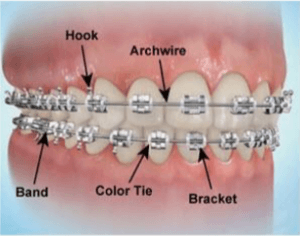
The Parts of Braces
There are many different parts to your new braces:
● Archwire: The main wires, or archwires, are shaped specifically to fit around the arch into the bracket slots. Teeth move from the pressure that is applied by the braces. That pressure comes from the archwire, which guides the direction of movement.
● Band: Bands are a ring of metal that fit around the molars and sometimes premolars and are cemented into place.
● Bracket: The bracket is the square metal attachment that holds the archwire against each tooth with the help of the color tie or o-tie. Brackets are bonded to each tooth by using light-activated cement.
● Color Tie (O tie): A color tie, also called an O tie, is a tiny rubber ring that secures the archwire into the bracket slot.
● Ball Hook: Hooks are small attachments on the brackets used to attach elastics (rubber bands).
Moving Wires or Bands
Wires, brackets, and bands are used to gently correct the placement of teeth over time and are meant to stay in place.
We sometimes use tiny rubber bands to temporarily connect brackets on the upper and lower jaw to provide more force and additional tooth movement. If you notice that a wire or band is moving, please call our office immediately. If you do not address the issue right away, it could delay progress and prolong treatment time.
Eating with Braces
While it may be hard to get used to, changing the foods you eat for a few months will give you a beautiful smile for a lifetime.
Foods to Enjoy
You can enjoy a variety of softer, easy-to-chew foods, including but not limited to:
● Dairy: pudding, soft cheeses, ice cream, peanut butter cups
● Breads: sliced lunch bread, soft tortillas, muffins without nuts, biscuits
● Meats/ Poultry: Soft-cooked chicken, meatballs, lunch meats
● Fruits: Applesauce, bananas, fruit juice, strawberries, grapes
● Other: Scrambled eggs, hot dogs, hamburgers, chili, beans, O-Ke-Doke Popcorn (the husks are removed)
Crunchy foods, like apples, carrots, celery, and hard pizza crust, can be cut up into small bite-sized pieces. However, you may want to avoid eating these foods immediately after adjusting your braces, since your teeth may be especially sensitive.
Foods to Avoid
You should avoid crunchy, sticky, chewy, and hard foods, including:
● Hard foods: popcorn, nuts, pretzels, ice, hard candy, and jerky
● Sticky foods: taffy, caramels, Skittles, Starburst, fruit roll-ups, gum, gummy vitamins, and chewy candy
● Sugary foods
You should also avoid thumb sucking and chewing on nails and pen caps, which can cause damage.
Decalcification is the irreversible white staining that occurs on teeth that have not been cared for properly. Drinking sweetened beverages while in braces can contribute to this process, so make sure to rinse with water or brush after drinking sports drinks, flavored milk, flavored water, fruit drinks, energy drinks, or soda pop, including diet soft drinks. These sugary drinks contain acid that can dissolve tooth enamel, contributing to cavities and permanent white marks. A healthy diet supports not only a beautiful smile but also overall good health.
Maintaining Good Oral Hygiene
Oral hygiene is a large part of maintaining your appliance. Braces life does require more frequent toothbrushing, but the end results will make it worth it.
Brushing and flossing with braces can be very difficult, but it needs to be done after every meal and snack to prevent discoloration, decay, and bacteria build-up. It should be done a minimum of three times a day for at least two minutes, preferably with an electronic toothbrush or power toothbrush head. If plaque is not removed, it can cause swollen gums, bad breath, decay, and decalcification.
Make sure you brush above and below the brackets as well as the gum line. Brush a second time if you still see plaque. Use a small proxy brush for hard-to-reach areas. Floss at least once a day using a floss threader under the wires, all the way down to the gum line, to thoroughly remove plaque and food particles trapped between the teeth. Be careful not to pull the wire when removing the dental floss.
Bring a toothbrush and toothpaste with you everywhere so you do not miss brushing your teeth after meals. If you happen to forget your toothbrush and toothpaste, at a minimum, swish with water after every meal and snack.
Dealing with Orthodontic Discomfort
Initial discomfort is expected when wires and bands are first placed, since they are encouraging your teeth to move. Over time, your teeth will shift into place and will become comfortable. If you find your braces are uncomfortable, try an over-the-counter headache medication and orthodontic wax to remove the discomfort. A warm saltwater rinse can also be soothing; this is also an easy way to dislodge trapped food debris.
Braces are meant to move teeth into proper alignment, so if you notice that your teeth are more wiggly than usual, this is expected. However, if you feel a tooth is excessively wiggly, feel free to address the concern with us.
Keeping Appointments
It's crucial that you come into our Grand Rapids orthodontic office for your follow-up visits. We carefully monitor your progress, as well as your overall oral care, to ensure that you will end up with the intended results. If you delay or miss appointments, it can lead to extended care time and negative results. It is also important to follow all your orthodontist's instructions when wearing braces, so that you can maintain great oral health and enjoy the best possible results. Keeping up with your routine professional cleanings at your family dentist will also support a healthier smile free from cavities.
Schedule an Appointment for Braces in Caledonia, MI
At Swan Orthodontics, we have created a warm and welcoming environment to help patients of all ages achieve their smile goals. If you are considering braces in Grand Rapids for yourself or your children, we invite you to schedule an appointment with our expert orthodontic team.